You’ve seen it before. The “perfect candidate” job description that sounds like it was crafted by an overzealous AI:
- “Must have 15+ years of experience in a language that has only existed for 7.”
- “Be an expert in everything from frontend to backend, DevOps, data science, security and possibly make a mean cup of coffee.”
- “Fluent in five programming languages, with a side passion for quantum computing.”
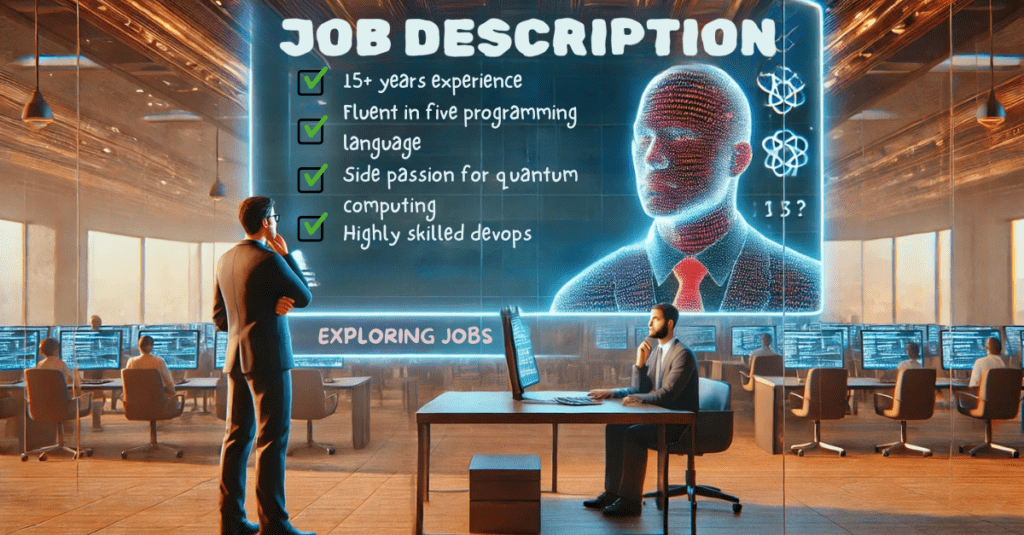
This person does not exist.
And even if they did, they’d probably already be the CTO of a Fortune 500 company and not browsing your job post on LinkedIn at 11 p.m.
The pursuit of the mythical perfect candidate is actively sabotaging your hiring process. If you’re waiting for some idealized unicorn to fall into your lap, you’re ignoring the amazing, high-potential talent right in front of you.
So, let’s talk about why the obsession with a flawless hire is hurting your company—and what you should be doing instead.
1. The “perfect” candidate is a unicorn (and unicorns aren’t real)
Hiring managers often fantasize about the one—that magical developer who writes flawless code, mentors junior engineers, deploys features at lightning speed, and never introduces a single bug. But let’s be real: that’s a fantasy.
Instead of searching for the non-existent 10/10 hire, start looking at the 8/10 hire with high growth potential. Because here’s the truth:
- Skills can be taught. Mindset and adaptability cannot.
- No one walks into a company and instantly knows your tech stack, processes, and quirks.
- The best employees are the ones who learn fast and grow with you.
Need help finding real, high-impact hires instead of chasing unicorns? TechTeems connects companies with vetted talent that actually exists.
2. Overloaded job descriptions are driving away great candidates
When was the last time you looked at a job posting and thought, “Wow, that sounds like a fun, reasonable role”? Yeah, probably never.

Because most companies treat job descriptions like a shopping list of every possible skill that might ever be useful.
Here’s what happens when you do that:
- Great candidates self-eliminate. Studies show that women, in particular, are less likely to apply if they don’t meet 100% of the criteria (while men will apply if they meet ~60%).
- You attract people who are great at buzzwords, not necessarily great at the job.
- You make your company look out of touch. If your job post sounds like it was copied from a 2012 startup playbook, you’re repelling modern talent.
How to fix it:
- Write job descriptions that focus on must-haves, not nice-to-haves.
- Describe what success looks like in the first 6 months, not a random skill checklist.
- Use human language. If your job post sounds like a legal contract, rewrite it.
3. The cost of hiring delays: while you wait, competitors are moving
The longer you chase Mr./Ms. Perfect, the longer your team struggles without the help they need. Meanwhile, your competitors?
✔ They’re hiring great-but-imperfect candidates.
✔ They’re training them up in weeks, not months.
✔ They’re shipping faster while you’re still waiting for “just one more resume.”
Waiting for the unicorn hire is actively costing you money, productivity and team morale.
How to fix it:
- Set a hiring deadline. If you haven’t found the “perfect” hire in 30 days, widen your criteria and start hiring for potential.
- Offer mentorship and training. Most companies would rather wait 6 months for a “perfect” hire than spend 6 weeks training someone solid. Do the latter.
- Embrace contract-to-hire. If you’re hesitant, start with a trial period. TechTeems can help with that.
4. Stop hiring for titles—start hiring for impact
One of the biggest hiring mistakes? Chasing big-name titles over actual ability.
Just because someone held a “Senior Engineer” or “Lead Architect” title doesn’t mean they’re a better fit than the mid-level dev who’s been actually doing the work.

Instead of obsessing over résumés, ask:
- Can they solve the problems your company faces?
- Do they show adaptability and willingness to grow?
- Are they aligned with the challenges you need to tackle?
Hiring for impact beats hiring for prestige every single time.
5. Great talent looks different than you expect
Some of the best developers out there don’t have a CS degree. Some of the best DevOps engineers started in IT support. Some of the best product managers were former designers.
The point? Great talent doesn’t always look like you expect it to. If you’re stuck filtering candidates by arbitrary criteria, you’re probably missing out on some outstanding candidates.
How to fix it:
- Prioritize real-world experience over résumés.
- Look at non-traditional candidates—bootcamp grads, career switchers, open-source contributors.
- Hire for potential and problem-solving ability, not just credentials.
Drop the myth, start hiring smarter
The perfect candidate is a lie. The longer you wait for them, the more you’ll watch top talent go elsewhere. Great hires are made, not found.
So stop waiting. Start hiring. Train where needed.