

By TechTeems Editorial
Featuring Lúcio Neto, Sr. Customer Success Manager at TechTeems
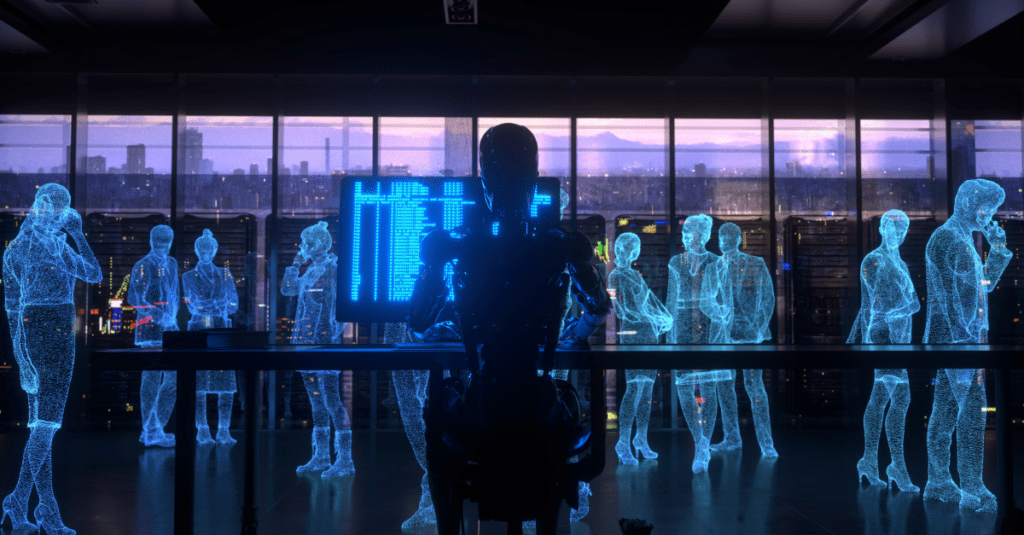
The robot recruiter is already here. But should we be watching our backs?
“There is no turning back from where we are with this technology,” says Lúcio Neto, Sr. Customer Success Manager at TechTeems. “It allows recruitment to be faster and more precise, so I would say it is already indispensable for any serious recruitment company or agency to have AI tools supporting different parts of the process.”
If that sounds like surrender, it’s not. AI is now table stakes. If your sourcing still depends on manual LinkedIn spelunking, you’re basically sending smoke signals while everyone else is using satellite internet.
Recruitment has always been a time sink — screening, scheduling, ghosting, apologizing for ghosting. AI hasn’t killed those rituals, but it has streamlined the suffering.
Recruitment is still a human-centered circus
Despite the hype, Neto insists that recruiting still starts and ends with people.
“At the end of the day, it is still just a tool,” he says. “Recruitment remains a human-centered process, both from the candidate’s perspective and from the recruiter’s. A human still reviews the final shortlist and curates the best options for the client to decide who moves forward.”
Translation: the machines might fetch the résumés, but the humans still have to vibe-check them.
Candidates know this, too. With AI-generated résumés flooding inboxes, the game has changed from all angles.
“It is quick and easy to tailor a résumé to a job description and present yourself as the ideal fit,” Neto said. “That might get you in front of a hiring manager, but the last mile of the process still depends on you and how you perform during the interviews and in the job itself.”
It’s a new kind of arms race. Recruiters use AI to find candidates faster; candidates use AI to be better candidates. It’s like watching two chess computers play: impressive, efficient and somehow still deeply human in its absurdity.
“Recruitment is still about matching the right people with the right roles, just like it has always been. That core has not changed,” Neto reminds us.
Bias hasn’t left the building
AI promised to make hiring fairer. Reality had other plans.
We have seen AI tools cut bias in some cases, but also amplify it for accents, disabilities or underrepresented groups.
“Ethical AI is still a broad and developing topic, not only in recruitment but in every real-world application of this technology,” Neto said. “We are still early in its creation and adoption, but the fact that people are openly discussing bias is a good sign. This is not going unnoticed.”
He’s right. The conversation itself is progress — but we’re nowhere near utopia.
“Human recruiters also have bias,” he adds. “We get tired, distracted or influenced by context. You might evaluate a candidate differently at the end of a stressful day than you would in the morning after good news.”
It’s a good reminder: your recruiter might be just as moody as your algorithm.
Still, Neto’s optimistic that AI can even the field over time.
“Some early studies show that candidates screened by AI in the first stage tend to perform better later in the process than those screened by humans, suggesting that AI might be more impartial and consistent.”
Then, the asterisk: “Of course, these are early findings. I would like to see larger, real-world examples before drawing strong conclusions. It is promising, though.”
Translation: AI might be less racist than your last boss, but let’s not throw a parade yet.
The job interview will outlive us all
The question no one can resist: will AI ever replace interviews?
“There is no replacement for a job interview with a real person, as long as humans are still working with humans,” Neto says. “The process might become mostly AI-driven, from sourcing to screening and testing, but people will still want to meet before hiring. I do not think a manager would hire someone after a fully automated process and meet them for the first time on their first day.”
It’s a comforting thought — that beneath all the automation, there’s still a handshake (or at least an awkward Zoom wave).
We may build AIs that can mimic empathy, but the real thing still matters.
“At a fundamental level, we still want to work with people we get along with. Cultural fit and interpersonal connection are deeply human elements that AI cannot replicate.”
So yes, your next interview might be pre-scheduled by a bot, transcribed by AI and scored for “confidence,” but the person on the other end will still decide if they want to spend eight hours a day Slacking with you.
The end of the traditional career (sort of)
Will AI make us all gig workers? Neto hedges: “It depends on what we mean by a traditional career.”
He’s not buying the doom.
“I think AI will have a huge impact on how we organize work, but I do not think companies as we know them will disappear. Collective and organized work is how we, as humans, achieve more and go further.”
But he does see structure changing.
“We will likely need fewer people, and those people will need to be more versatile — less specialized but with a broader understanding of business and how to get things done.”
Neto predicts a new type of worker: part generalist, part orchestrator of specialized AI agents. “That could lead to leaner and more efficient companies, maybe four or five people doing the work that currently takes a hundred.”
The image is wild: a handful of humans managing swarms of digital interns, delegating across time zones and server farms.
And, of course, we can’t leave out the jobs coming out of this…
The global brain drain is already happening

When asked if AI talent shortages could spark a global brain drain, Neto said, “Definitely. That is already happening in the AI field between companies and even countries. We are seeing stories of contracts with compensation levels comparable to NBA athletes for top AI engineers.”
Let that sink in: coders with LeBron-level contracts.
On the flip side, he points out, “We are seeing fewer entry-level openings across the tech industry. Whether that is because of AI or other economic and social factors is still up for debate.”
It’s a weird paradox — the golden age for the elite few, a hiring freeze for the rest. “What is certain is that we are living through a major shift in how we find work, get things done, and define our careers,” he says.
He adds what might be the most honest line of the whole conversation:
“It is hard to predict where it is heading, but everything is changing fast and affecting everyone, from elite AI engineers earning millions to junior developers just hoping to land their first job.”
The cautious optimist
Ask Neto if he’s excited or terrified about the future of recruiting, he said. “I am an optimist by nature, and I believe technology is the best engine we have to drive change — hopefully more for good than for bad. Still, history reminds us that progress is not always linear, and sometimes the bad can outweigh the good.”
He’s not drinking the AI Kool-Aid — he’s sipping it slowly, watching for side effects.
“Done right, AI can make processes faster, more efficient, and help everyone involved, from candidates to recruiters to clients. The key is keeping the human touch and the sense of empathy that make this industry work.”
That, right there, is the crux. AI might be the power tool, but humans are still the builders.
“Right now, a smaller recruitment agency can achieve much more and deliver far greater impact with the same structure than it ever could even five years ago,” he says. “So it is a pretty exciting moment to be part of this.”
“As for the long-term effects, no one really knows. If anyone has a solid answer about where we will be in 10 years, I would love to hear it — because that is a million-dollar insight.”
Until then, the only thing certain is that the robots are in the room — and for now, they’re taking notes, not your job.